Women’s to men’s clothing size conversion: how to shop across sections
Some of the best knits, coats and trousers are on the other side of the shop. Here’s how the sizes translate, and why your shoulders matter more than the label.
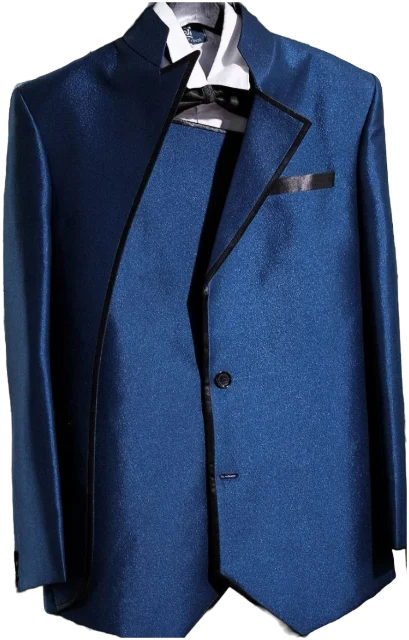
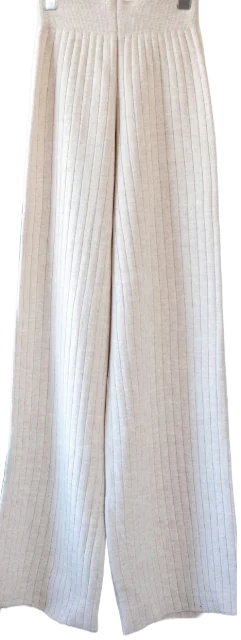
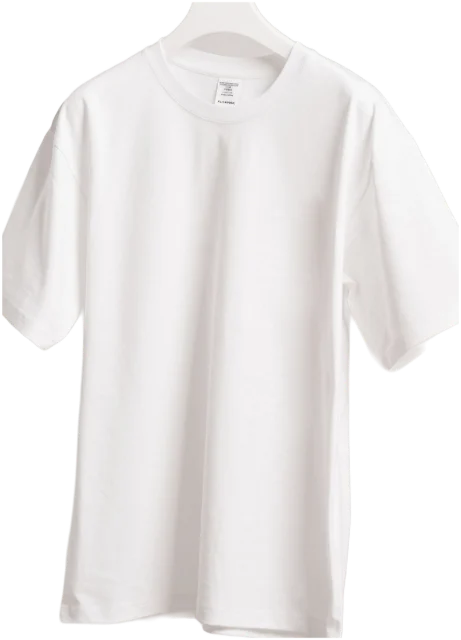
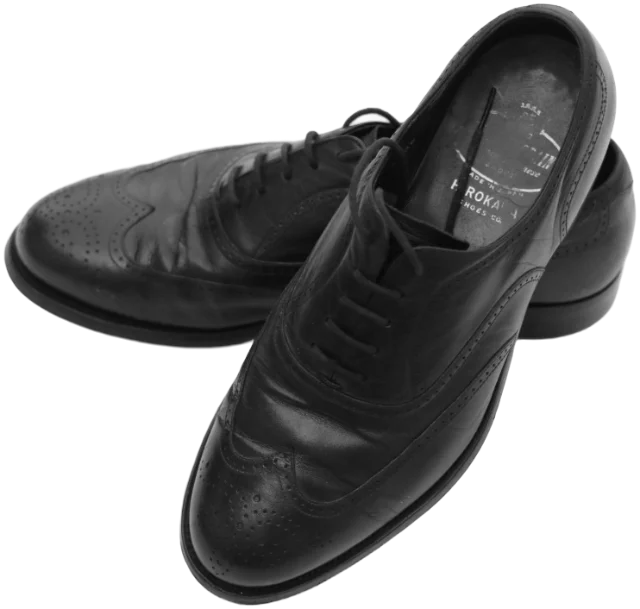
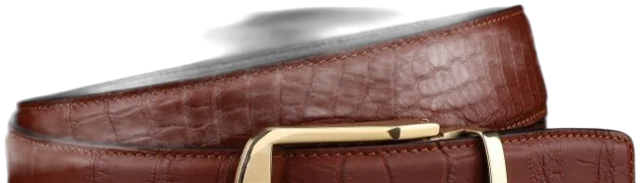
There’s no exact women’s to men’s clothing size conversion, because the two sections are cut for different bodies. As a rough guide, the same letter runs half to one size smaller in womenswear, so a women’s M sits between a men’s S and M. Measure yourself, compare each shop’s chart, and judge tops by the shoulders.
Key takeaways
- Measure yourself in centimetres and compare with each shop’s chart; brands vary by a size or more.
- The same letter runs roughly half to one size smaller in womenswear.
- For tops, the shoulder seam decides; for trousers, the gap between waist and hip does.
- UK and European shoe sizes are nominally the same for men and women; US sizes are not.
- Knitwear and coats cross over most easily; tailored jackets are the hardest.
Why men’s and women’s sizes don’t line up
Plenty of people shop both sides of the shop: men with a slim frame, women who want a roomier knit, anyone who dresses by fit and style rather than by section. The clothes cross over easily. The sizes don’t.
Menswear and womenswear use different labels. Women’s clothing in the UK is usually sold in dress sizes (6, 8, 10 and up) based on bust, waist and hip. Men’s clothing uses chest and waist measurements in inches, collar sizes for shirts, and letters for most other things.
Underneath the labels, the patterns differ too. Women’s tops are usually shaped for a bust and a defined waist, with narrower shoulders and shorter sleeves. Men’s tops tend to be cut straighter, with broader shoulders, longer sleeves and more length in the body. Women’s trousers usually allow more room at the hip compared with the waist.
A European standard for labelling clothes by body measurements, EN 13402, shows the gap neatly: a men’s M covers a 94–102 cm chest, a women’s M a 90–98 cm bust. Plenty of shops use their own sizing, though, so treat every number in this guide as a starting point. Getting it wrong is common: in a Cambridge study of regretted purchases, buying the wrong size was the most common reason people gave, in their own words, for regretting clothes.
How to measure yourself
Use a soft tape, stand relaxed and keep the tape level and snug, not tight. Measure in centimetres; it’s more precise, and most size charts give it.
- Chest or bust: around the fullest part, under your arms and across your shoulder blades.
- Shoulders: measure a top that fits you well, laid flat, from shoulder seam to shoulder seam. Body charts rarely give this, and it’s the number that matters most.
- Waist: where your trousers actually sit, which may not be your natural waist.
- Hips: around the fullest part of your seat, with your feet together.
- Inside leg: from the crotch seam to the hem on trousers that are the right length for you.
- Feet: stand on paper with your heel against a wall, mark the tip of your longest toe and measure. Do both feet, later in the day, and use the longer one.
Tops, shirts and knitwear: converting sizes
Start with your chest or bust measurement and this table, which combines the European standard’s letter codes with a typical UK women’s size chart, as set out on Wikipedia’s summary of clothing sizes. These are approximate ranges; individual brands vary by a size or more in either direction.
| Chest or bust | Men’s letter | Men’s chest (inches) | Women’s letter | Women’s UK size |
|---|---|---|---|---|
| 70–78 cm | XXS | 28–30 | XXS–XS | 4–6 |
| 78–86 cm | XS | 31–34 | XS–S | 8–10 |
| 86–94 cm | S | 34–37 | S–M | 10–12 |
| 94–102 cm | M | 37–40 | M–L | 14–16 |
| 102–110 cm | L | 40–43 | L–XL | 16–18 |
| 110–118 cm | XL | 43–46 | XL | 20–22 |
Shoulders decide
Your chest measurement gets a top on; your shoulders decide whether it looks right. If you have broad shoulders and buy womenswear, go up until the shoulder seam sits at the edge of your shoulder, then judge whether the body is too roomy. If you have narrow shoulders and buy menswear, choose dropped shoulders or raglan sleeves, which hide the difference.
Sleeves and length
Men’s sleeves and bodies usually run longer. That’s good news if you have long arms or want a jumper you can push up, and less good if you want a crisp shirt cuff at the wrist. Women’s tops are often shorter in the body, which matters if you’re tall or like to tuck in.
Shirts and tailoring
Men’s shirts are often sold by collar size in inches, from about 14 to 18½, and the buttons sit on the opposite side; that part is purely cosmetic. Tailored jackets are the hardest crossover, because they’re built around the shoulders and chest, and shaping in the wrong place shows. Try them on, or buy where returns are easy. Once one fits, here’s how to style a blazer from smart to casual.
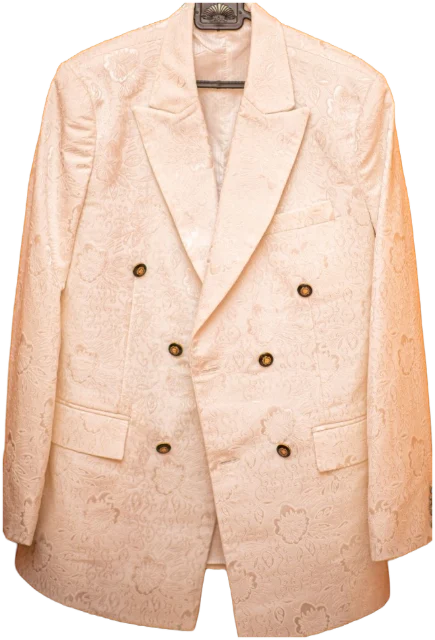
Knitwear and coats
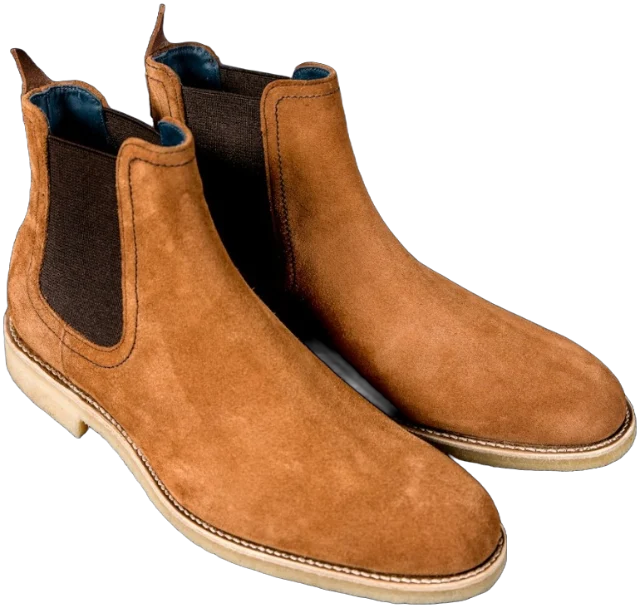
The easiest pieces to cross over are knits, overshirts and coats, because they’re cut with more room to begin with. Trying a men’s jumper a size down or a women’s coat a size up is a good first move.
Trousers and jeans: converting sizes
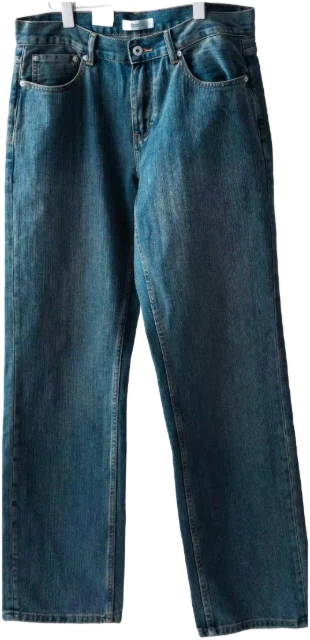
Trousers are harder than tops, because waist, hip, rise and leg length all have to work at once. Men’s trousers are usually sold by waist and inside leg in inches, such as 30W 32L. Women’s trousers come in dress sizes, sometimes with short, regular and long lengths, and women’s jeans are often sized by waist in inches too.
As a rough waist guide, on a typical UK women’s chart a size 8 is around a 24-inch waist, a 10 around 26 to 27, a 12 around 28 to 29, a 14 around 30 to 31 and a 16 around 32 to 33. The hip on the same chart is roughly 25 to 28 cm bigger than the waist (a size 12 might be a 74 cm waist with a 99 cm hip), which is why trousers that match on the waist can feel very different elsewhere.
- Buying women’s trousers with a straighter figure: choose by waist and expect spare room through the hip and thigh. Straight and wide legs make that look intentional.
- Buying men’s trousers with curvier hips: choose by hip, then have the waist taken in. A belt helps in the meantime.
- Check the rise. Women’s trousers often sit higher on the waist; men’s usually allow more room in the seat and the front.
- Check the leg length in centimetres or inches, not short, regular and long, which vary from shop to shop.
- Measure, don’t trust. The waist number on a pair of trousers isn’t always the exact measurement, so lay the waistband flat and double it if you can.
Shoes: women’s to men’s size conversion
The UK shoe size scale is nominally the same for men and women, and so is the European scale, as the standard sizing systems show. So a UK 7 should be a UK 7 in either section, although some makers number women’s UK sizes differently. US sizes do differ: a US women’s size is usually 1 to 1.5 higher than the men’s for the same length, and a US men’s size is about one higher than the UK.
The bigger difference is shape. A study in Ergonomics found that, for the same foot length, men’s feet tend to be wider and higher than women’s. In practice:
- Women’s to men’s: start in your usual UK size and expect a roomier fit. Try half a size down, or a thicker sock, if your heel lifts.
- Men’s to women’s: start in your usual UK size and check the width. If your toes feel pinched, try half a size up or a style that comes in wide fittings.
- Use the foot-length chart. Foot length in centimetres is the most reliable number on any shoe size guide.
- Check the ends of the range. Size runs don’t always overlap much, so look at the smallest men’s and largest women’s sizes, and at unisex styles.
Worked examples
Three examples, using the ranges above. The numbers will shift from shop to shop; the method is what carries over.
A slim frame shopping womenswear
Chest 84 cm, waist 71 cm (28 inches), narrow shoulders. In menswear that’s an XS, which may still feel big. In womenswear, start with an S, or a UK 8 to 10, in tops, and go up to an M or a 12 if the shoulders or length feel short. In trousers, try a UK 10 or 12 by waist, in a straight or wide leg so the extra hip room looks deliberate.
A curvier figure shopping menswear
Bust 97 cm, waist 79 cm, hip 104 cm: roughly a UK 14. In men’s knitwear and shirts, start with an M for a relaxed fit or an S for a closer one, and expect longer sleeves. In men’s trousers, size for the hip rather than the waist, then have the waist taken in to fit.
Shoes across sections
A UK women’s 7 with fairly wide feet, looking at men’s trainers. Start with a UK 7 (around EU 40 to 41), expect a little more room across the foot, and check the foot-length chart. On a US site, look for a men’s 8 rather than a 7.
Shopping tips that save you returns
- Read the garment measurements, and the model’s height and size, not just the size name.
- Treat unisex as menswear until the size chart says otherwise; unisex ranges are often cut on men’s sizing.
- Buy where returns are simple. Online, you can usually cancel within 14 days of delivery, but return postage for unwanted items may be yours to pay, as Which? explains.
- Find a good alterations shop. Taking in a waist or shortening a hem is routine; changing a jacket’s shoulders usually isn’t worth it.
- Try second-hand first. It’s a cheap way to learn which shapes from the other section suit you, and our second-hand shopping tips explain how to measure pieces flat.
- Let style lead. If you’re not sure what you’re after, start with finding your personal style. If you’ve seen the exact piece in a photo, here’s how to find clothes from a picture.
Above all, don’t let a label make the decision. A great fit is a great fit, whichever rail it came from, and buying slowly and carefully, as in our guide on how to stop impulse buying clothes, saves you most of the returns in the first place.
Questions
Is a women’s medium the same as a men’s small?
Roughly, across the chest. Under the European standard’s letter codes, a women’s M covers a 90–98 cm bust and a men’s S an 86–94 cm chest, but men’s tops are usually broader in the shoulder and longer in the sleeve.
What is a women’s size 10 in men’s sizes?
By chest, a UK women’s 10 (around an 86 cm bust) is close to a men’s XS or S. By waist, it’s roughly a 26 to 27-inch men’s trouser, but check the hip, because women’s trousers have more room there.
Are UK men’s and women’s shoe sizes the same?
Nominally, yes: the UK scale is the same for both, although some makers number women’s sizes differently. Men’s styles may feel roomier for the same length, so check the width and the foot-length chart.
Does unisex clothing follow men’s or women’s sizes?
Often men’s. If you normally buy womenswear, start a size down from your usual letter and check the garment measurements before you order.
Sources
- EN 13402, Wikipedia
- Clothing sizes, Wikipedia
- Shoe size, Wikipedia
- Sex-related differences in foot shape of adult Caucasians: a follow-up study focusing on long and short feet, Ergonomics (Krauss, Langbein, Horstmann and Grau, 2011)
- Questioning demand: A study of regretted purchases in Great Britain, University of Cambridge (Skelton and Allwood, Ecological Economics)
- I want to return something bought online, Which?